

MSc · Lucerne · 90 ECTS
MSc in Wine and Beverage Business Management
The global beverage trade as a business degree — with WSET Level 2 certification built into the curriculum.
At a glance
One year, two semesters, two degrees
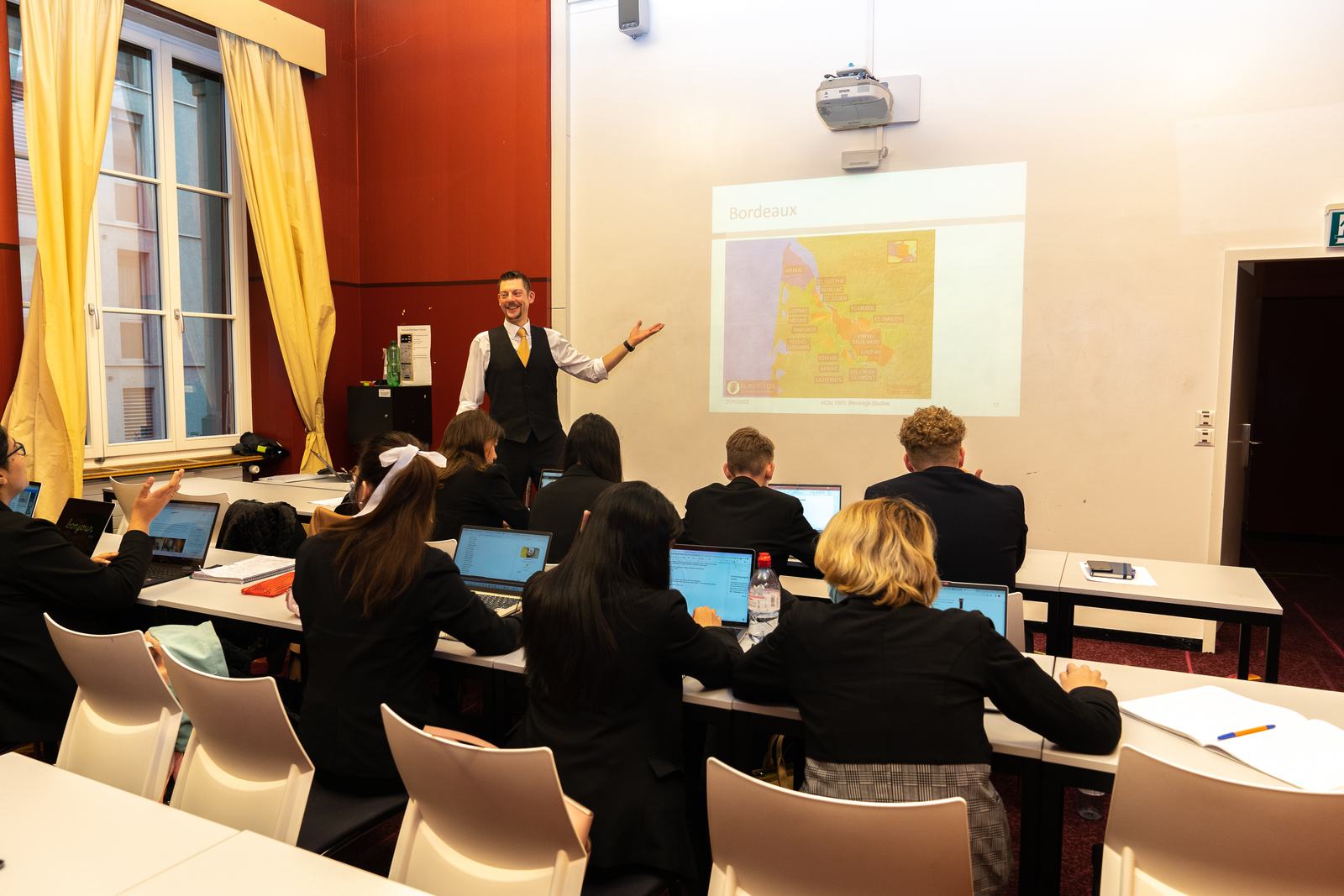
Semester 1 — six months on campus in Lucerne. Academic study worth 60 ECTS / 120 UK credits: the specialist modules below, plus the management core shared across the MSc portfolio.
Semester 2 — six months off campus. An independent research project worth 30 ECTS / 60 UK credits, and alongside it an optional six-month industry internship in Switzerland or worldwide. Swiss hospitality placements carry a gross minimum of CHF 2'404/month.
For master's students the internship is optional rather than a compulsory component of the programme. How Semester 2 works →
Curriculum
What you study
Specialist modules first, the management core alongside them, then six months on your own research.
| Semester | Module | Type |
|---|---|---|
| 1 | Emerging Trends in Global Wine Entrepreneurship (includes WSET Level 2) | Specialist |
| 1 | Luxury and Experience Management in the Beverage Sector | Specialist |
| 1 | Global Beverage Industry Dynamics and Innovations | Specialist |
| 1 | Global Wine Markets and Business Strategy | Specialist |
| 1 | Leadership in Business | Management core |
| 1 | Marketing and Branding in a Digital Society | Management core |
| 1 | International Human Resource Management | Management core |
| 1 | Research Methods | Management core |
| 2 | Independent research project + optional six-month industry internship | 30 ECTS |
Semester 1 carries 60 ECTS / 120 UK credits in total; Semester 2 carries 30 ECTS / 60 UK credits. BHMS does not publish a per-module credit weighting for the MSc programmes, so none is shown here — the detailed course programme is confirmed at application.
What makes it different
A wine qualification inside a business degree
WSET Level 2 is the internationally recognised wine and spirits certification the trade actually asks for. Here it is not an evening course bolted on afterwards — it sits inside the Emerging Trends in Global Wine Entrepreneurship module, examined as part of the master.
Included: WSET Level 2, embedded in the Emerging Trends in Global Wine Entrepreneurship module
Where it leads
Graduate roles BHMS names
These are the graduate directions BHMS lists for this programme.
- beverage portfolio consultant
- brand manager
- business development manager
- export manager
What every graduate carries is the same: a British master's degree from Robert Gordon University alongside the Swiss award, from a school ranked #12 worldwide in the QS Hospitality & Leisure Management subject ranking 2026. Careers and outcomes →
France's 2026 wine harvest is estimated at nearly 35 million hectolitres, with Champagne down by about half; here's what the 2026 French harvest means for the wine trade.
Admission & fees
What it takes, what it costs
Entry requirements
- A recognised bachelor's degree in any discipline
- — or a BHMS Postgraduate Diploma / Graduate Certificate
- English at IELTS 6.0 or equivalent (B2)
- A Preparatory English Programme is available below the threshold
BHMS notes that visa requirements differ for applicants aged 30 and over. Intakes for this programme: February 2027 · August 2027 · November 2027.
CHF 41'700 — one invoice
- Tuition CHF 31'800
- Operating costs CHF 2'750 — health and medical insurance, visa/B-permit and local tax, e-campus and internet, internship placement service, first airport pick-up
- Living expenses CHF 6'150 — 24 weeks, shared standard accommodation and meals
- Application fee CHF 1'000
Also consider
Other MScs, same structure

Questions
Straight answers
How is the MSc in Wine and Beverage Business Management structured?
Twelve months in two semesters. Semester 1 is six months of academic study on campus in Lucerne — 60 ECTS / 120 UK credits. Semester 2 is six months off campus: an independent research project worth 30 ECTS / 60 UK credits, plus an optional internship in Switzerland or worldwide. Total: 90 ECTS / 180 UK credits.
What degree do I receive?
The MSc in Wine and Beverage Business Management, awarded jointly by BHMS and Robert Gordon University, Aberdeen — two degrees for one year of study. Scotland's top-ranked modern university in the current editions of all three major UK league tables, and Top 20 in the UK for graduate career prospects (Guardian 2026).
What are the entry requirements?
A recognised bachelor's degree in any discipline, or a BHMS Postgraduate Diploma or Graduate Certificate, plus English at IELTS 6.0 or equivalent (B2). BHMS notes that visa requirements differ for applicants aged 30 and over.
What does it cost?
CHF 41'700 for the year, identical across all eight MSc programmes: tuition CHF 31'800, operating costs CHF 2'750, living expenses CHF 6'150 covering 24 weeks in shared standard accommodation with meals, and a CHF 1'000 application fee.
When does it start?
Intakes for this programme: February 2027, August 2027, November 2027. Intake dates differ between BHMS master programmes, so check the date for the specific MSc you want rather than assuming a shared calendar.
Watch
See it for yourself
Next step
One year. Two degrees. Switzerland.
Intake dates differ by programme — most run August, November and February. Lucerne & Zurich, Switzerland.
Every MSc is awarded by BHMS and Robert Gordon University, Aberdeen — and Semester 2 can be spent on an optional six-month industry internship. Swiss hospitality placements carry a gross minimum of CHF 2'404/month. How the internship works →