


Why Switzerland
A master’s where the industry actually is
One year, in English, in the middle of Europe. Two campuses — Lucerne and Zurich — a school ranked #12 worldwide in Hospitality & Leisure Management, with an internationally mixed student body in the room with you.
The case for the country
Switzerland is not a backdrop. It is the syllabus.
Switzerland is the subject matter of a BHMS master's, not just its location: a small multilingual state in the centre of Europe, run on precision service, international organisations, banking, and a tourism economy that runs year-round across lakes, mountains and cities. Plenty of business schools teach international management from a classroom in a single-language country instead.
BHMS has been part of that for 27+ years, with a partner network of 40+ major hospitality brands. The teaching language is English throughout; German language modules are available alongside it.
And the master’s is one year, not two. Semester 1 is six months of academic study on campus. Semester 2 is six months of independent research, with the option of a six-month industry internship in Switzerland or worldwide.
The eight MSc programmes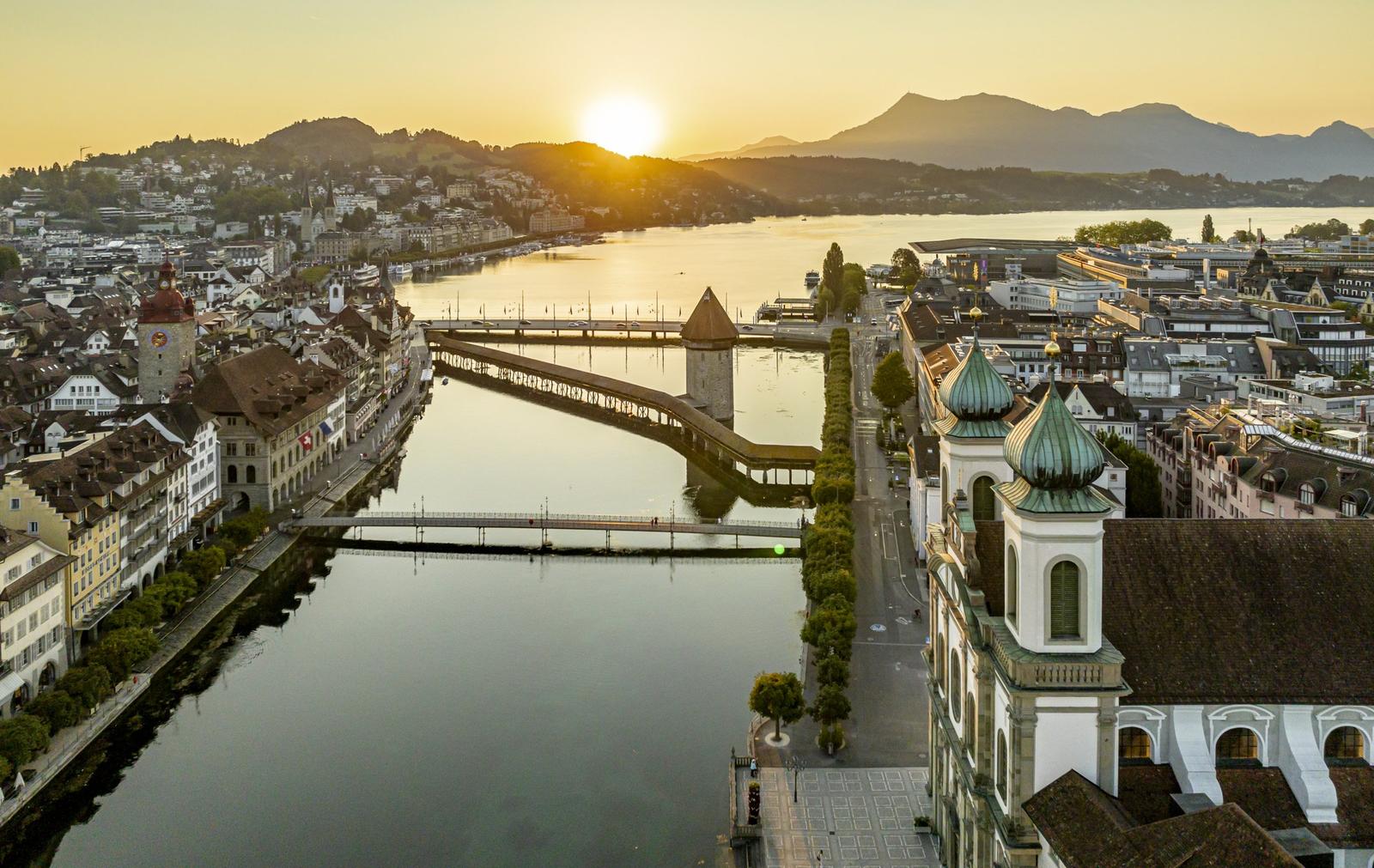
Your base
Two cities. One school.
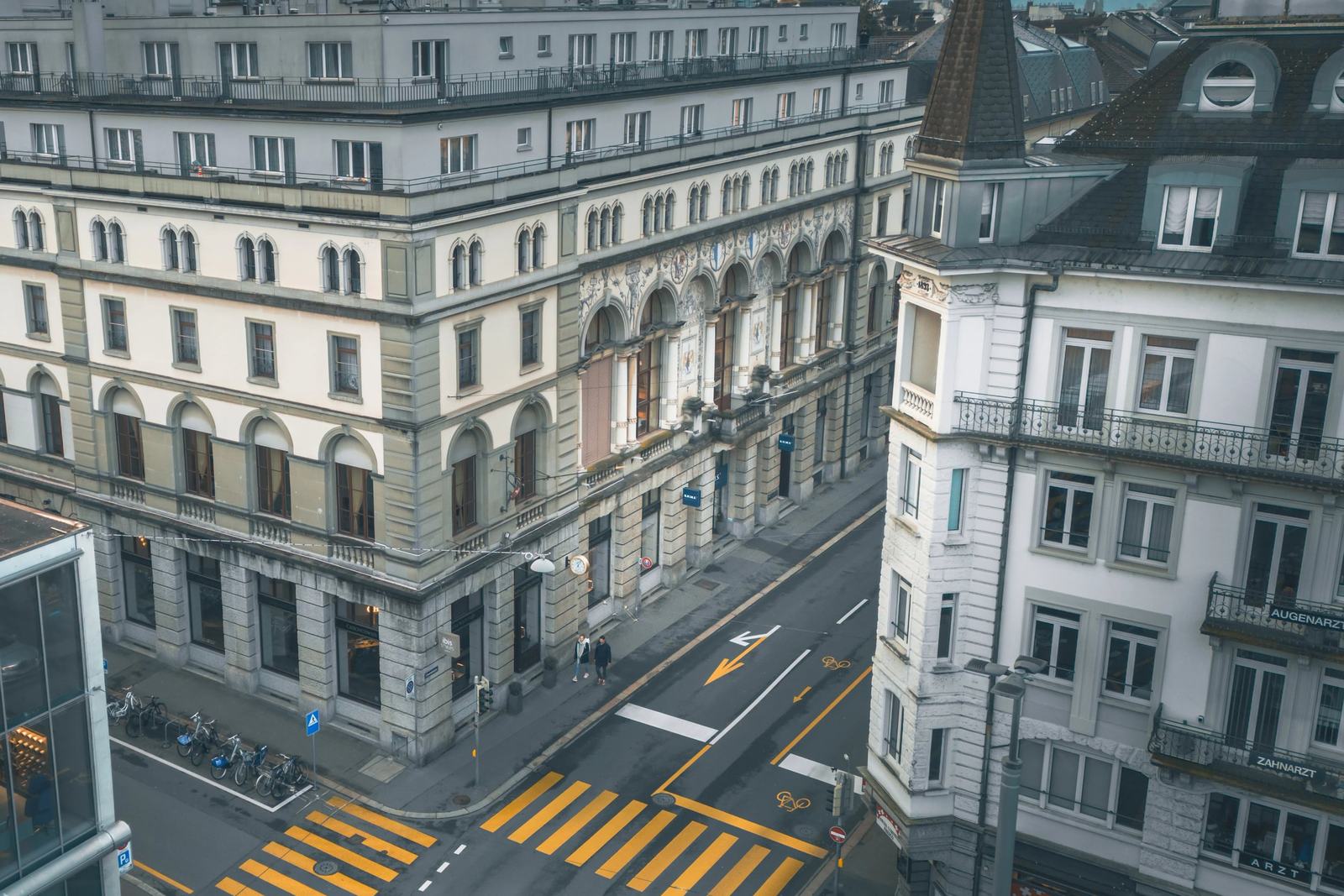
Lucerne is the home campus: a compact lakeside city ringed by mountains, small enough to walk across and well connected by Swiss rail to the rest of the country. It is also a working tourist destination in its own right — useful, when your degree is about hospitality, tourism or food.
Zurich is the second campus and the country’s financial and corporate centre — the natural setting for the banking, aviation and sports business programmes.
Your campus is decided by the programme you choose, not the other way around.
Inside both campuses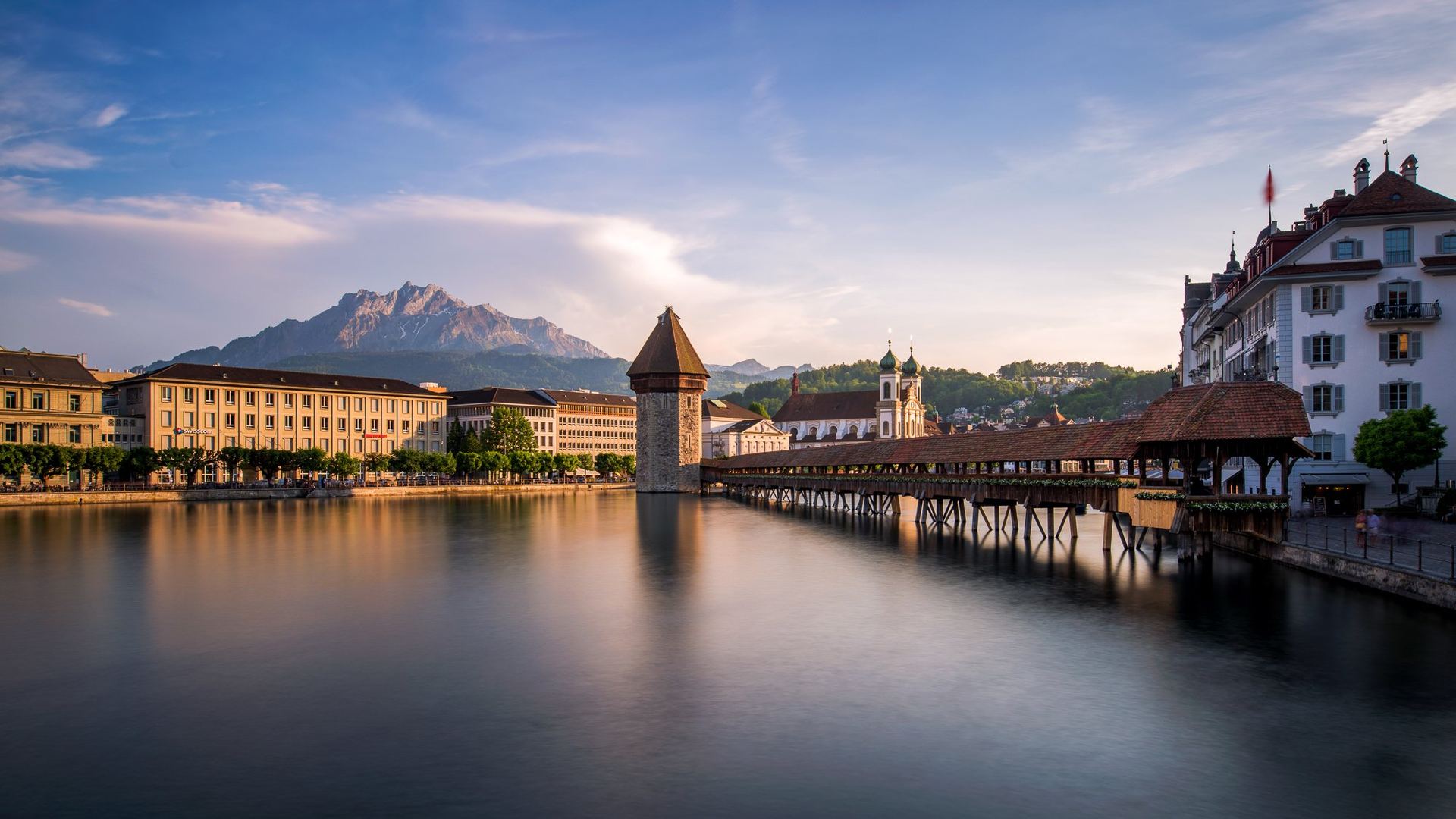
Which programme sits where
Campus by programme
Lucerne
Zurich
- Global Business Management
- International Hospitality Business Management
- Business, Sports and Event Management
- Business, Banking and Finance
- Business and Airline Management
Zurich admissions: martin.wyler@bhms.ch · +41 44 298 17 30
Global Business Management and International Hospitality Business Management are delivered at both campuses, so they appear in both columns. Intake dates differ by programme — check the individual programme page.
The year around the year
A country you can actually see
Switzerland is small and densely connected by train. Lakes, mountain railways and four national language regions all sit within reach of the campus.
This matters more than it sounds. A tourism, hospitality or events master’s taught inside a working destination gives you somewhere to test every case study you are handed.
MSc International Tourism Management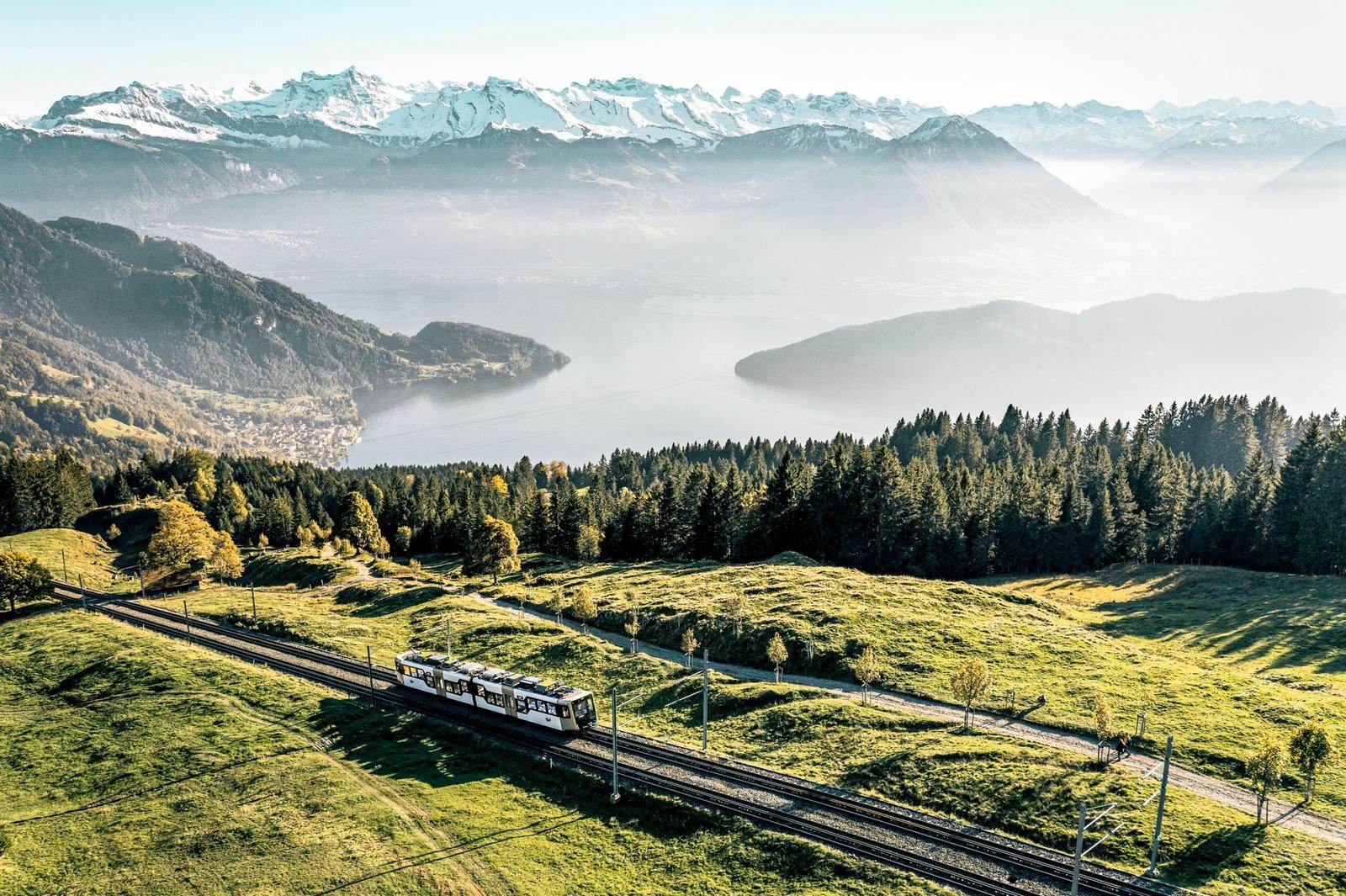
The money reality
One invoice. Accommodation and meals in it.
Switzerland has a reputation for being expensive, and the honest answer is that the BHMS fee is structured to absorb most of that rather than leave it as a surprise. All eight MScs cost exactly the same: CHF 41'700 for the whole year.
- Tuition — CHF 31'800
- Operating costs — CHF 2'750: mandatory health and medical insurance, visa or B-permit and local tax, e-campus and internet access, internship placement service, first airport pick-up
- Living expenses — CHF 6'150: 24 weeks of shared standard accommodation and meals
- Application fee — CHF 1'000
The MBA with Specialisation totals CHF 44'700; the 18-month MSc + MBA route totals CHF 58'100 at 2026 rates (the BHMS 2027 fee table does not list it). Studio accommodation upgrades are a surcharge on top.
Full fee breakdown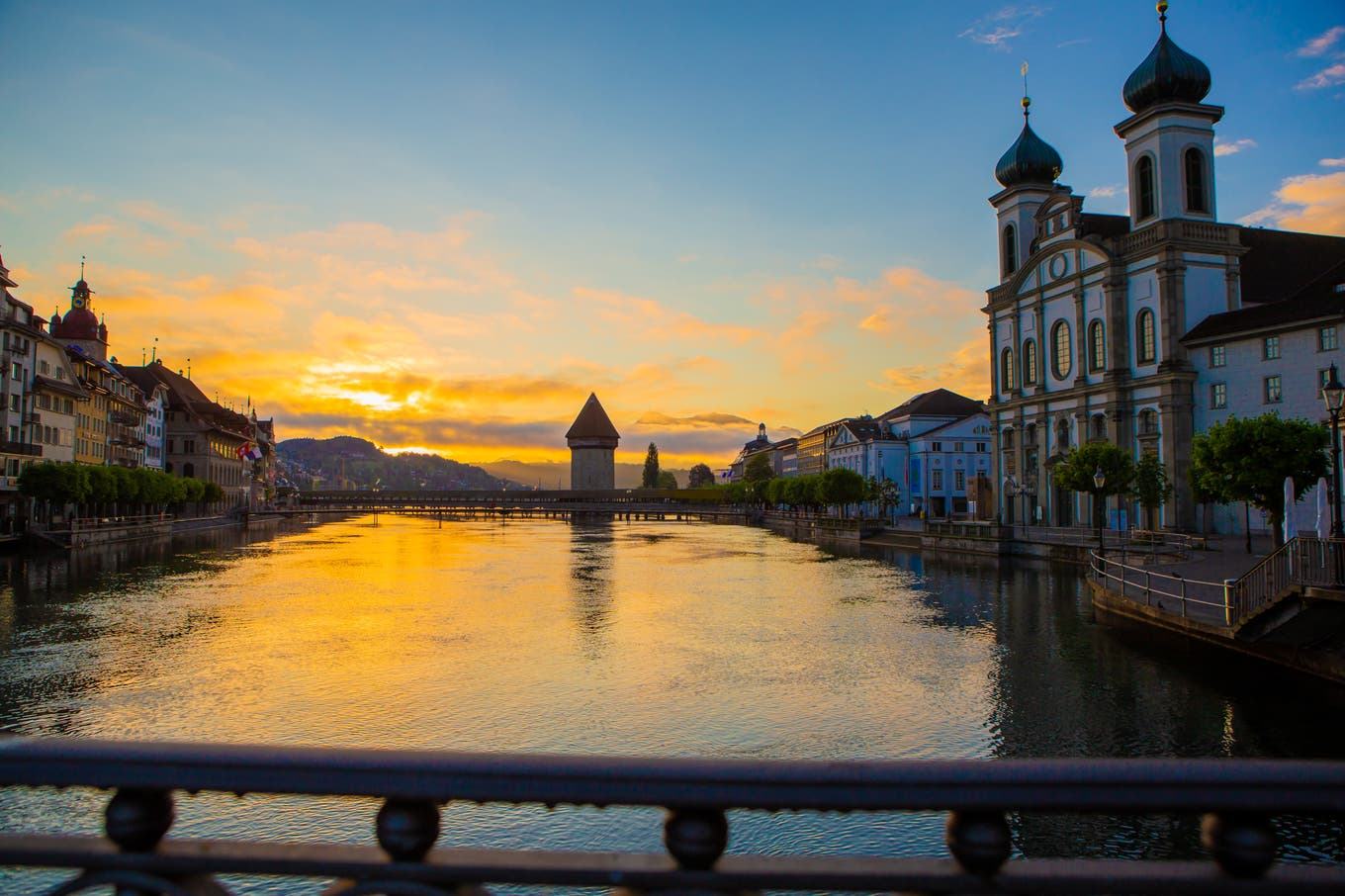
And the money coming back
What a Swiss internship pays
Semester 2 of the MSc is a research project with an optional six-month industry internship — in Switzerland or worldwide. If you take a Swiss hospitality placement, this is what the national labour agreement puts on the table.
CHF 2'404
Gross minimum per month
The published gross minimum for a Swiss internship placement, before deductions for accommodation, board, social security and other benefits.
~CHF 1'500
Net, countryside placement
Roughly what is left after taxes, meals and insurance where the employer provides accommodation.
CHF 800–1'000
Net, major-city placement
Roughly what remains for a placement in a major city without employer accommodation, after taxes and rent.
Two things to be straight about: the internship is optional within the MSc, not a guaranteed component of it; and BHMS states the minimum salary does not apply where the placement sits outside hospitality. Swiss positions also require German, French or Italian language skills.
How the internship worksRecognition
The labels behind the degree
A Swiss address is not a credential on its own. These are the ones that are documented.
QS World University Rankings by Subject 2026
#12 worldwide in Hospitality & Leisure Management — an independently compiled subject ranking, not a self-reported one.
QS five-star institution
BHMS holds a QS five-star rating and is one of only 6 five-star rated institutions in Switzerland.
Swiss recognition
Approved by Swiss local authorities as a registered private school and listed in the Swiss Private School Register, with the eduQua Swiss quality label.
A second, British degree
Every MSc and the MBA are awarded jointly with Robert Gordon University, Aberdeen (Scotland, UK), under the UK QAA quality framework. You graduate with two degrees.
Affiliations
- Swiss Federation of Private Schools (SFPS)
- AEHT — Association Européenne des Écoles d’Hôtellerie et de Tourisme
- EURHODIP
- Swisstainable
- World Chefs
- CHRIE
- AHLA
Accreditation bodies
Institute of Hospitality (IoH) for hospitality programmes and the American Culinary Federation Education Foundation (ACFEF, recognised by CHEA) for the culinary and patisserie track.
Who else is there
An international cohort, one working language
The cohort is the other half of a Swiss master’s. BHMS draws students from around the world onto two campuses, and the whole portfolio is taught in English — so the international management theory in the syllabus is being practised in the seminar room before you ever apply it at work.
BHMS has operated its Lucerne and Zurich campuses for 27+ years. That is the network you are joining, weighted towards the hospitality, tourism and service industries where the school’s QS ranking was earned.
Questions
Straight answers
Do I need to speak German to study a master’s in Switzerland?
No. Every BHMS master programme is taught in English, and admission is set at IELTS 6.0 or equivalent (B2). German Communications is available as an optional support module. Language does matter for one thing: BHMS notes that internship positions inside Switzerland require German, French or Italian language skills, so if a Swiss placement is your goal, start the German module early.
Is the internship part of the master’s, and is it paid?
Semester 2 of every MSc is an independent research project with an optional six-month industry internship, in Switzerland or worldwide. Where a Swiss hospitality placement is taken, the gross minimum under the national labour agreement is CHF 2'404 per month before deductions. BHMS states the minimum does not apply to placements outside hospitality.
What does the Swiss fee actually cover?
All eight MSc programmes cost the same: CHF 41'700 in total — tuition CHF 31'800, operating costs CHF 2'750, living expenses CHF 6'150 for 24 weeks of shared standard accommodation and meals, and the CHF 1'000 application fee. Operating costs cover mandatory health and medical insurance, the visa or B-permit and local tax, e-campus and internet access, the internship placement service, and your first airport pick-up.
Is BHMS recognised in Switzerland?
BHMS is approved by Swiss local authorities as a registered private school and is listed in the Swiss Private School Register. It holds the eduQua Swiss quality label, a QS five-star institution rating — one of only 6 five-star rated institutions in Switzerland — and every MSc is awarded jointly with Robert Gordon University, Aberdeen, under the UK QAA quality framework.
Lucerne or Zurich — which campus should I choose?
The campus is set by the programme, not by preference. Lucerne hosts International Tourism Management, Wine and Beverage Business Management, Culinary Entrepreneurship and the MBA. Zurich hosts Business, Sports and Event Management, Business, Banking and Finance, and Business and Airline Management. Global Business Management and International Hospitality Business Management run at both.
Watch
See it for yourself
Next step
One year. Two degrees. Switzerland.
Intake dates differ by programme — most run August, November and February. Lucerne & Zurich, Switzerland.
Every MSc is awarded by BHMS and Robert Gordon University, Aberdeen — and Semester 2 can be spent on an optional six-month industry internship. Swiss hospitality placements carry a gross minimum of CHF 2'404/month. How the internship works →